
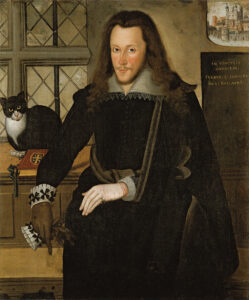
 “Be not self-will’d, for thou art much too fair / To be death’s conquest and make worms thine heir.” —Sonnet 6
An entry for May 20, 1609, in the Elizabethan Stationers’ Register shows Thomas Thorpe’s intention to publish “a booke called Shakespeare’s sonnettes,” printed later that year. Today, after 417 years the authorship question persists.
Of the 154 sonnets, 126 were addressed to a young nobleman—the “Fair Youth,” generally recognized as Henry Wriothesley, 3rd Earl of Southampton. In the first 17 the author urges the Fair Youth to marry and procreate. If William Shakspere of Stratford wrote the Sonnets, we have at least one problem.
No rural commoner would have dared to write (if he could write—many commoners could sign their names and nothing else) sophisticated poetry offering personal advice on marriage and sex to a wealthy and powerful aristocrat.
This problem vanishes, however, if Edward de Vere, 17th Earl of Oxford, wrote the Sonnets. What could be more natural than an older nobleman giving advice to a younger nobleman? Especially to one whom he hoped would marry his daughter?
Yep, there’s that: Southampton was engaged to Elizabeth Vere in 1590.
Want more mystery? Read about secret ciphers in the Dedication of the Sonnets here.
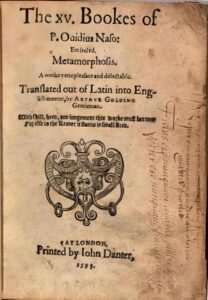 In May 1574 Arthur Golding, best known for his translation of Ovid’s Metamorphoses, dedicated his translation of Th’Abridgement of the Histories of Trogus Pompeius to his nephew, Edward de Vere:
…[I]t is not unknown to others, and I have had experience thereof myself, how earnest a desire [you have] … to read, peruse and communicate with others … the histories of ancient time and things done long ago [and] of the present estate of things … not without a certain pregnancy of wit and ripeness of understanding, [not only to] rejoice the hearts of all such as bear faithful affection to th’ honourable house of your ancestors, but also [to] stir up a great hope and expectation of such wisdom and experience in you in time to come…
The book was an abridgement of Trogus Pompeius’s 44-volume ancient world history. And at the time of the dedication, Lord Edward was…14.
De Vere entered Queens’ College Cambridge at age 8, received honorary Masters degrees at Cambridge and Oxford at 14 and 16, and enrolled at Gray’s Inn (law school) at 17.
“You think about William Shakespeare, you think a man basically with a second grade education wrote some of the greatest poetry of all times? I think maybe not.”
—Robin Williams
For a list of other famous skeptics, go here.