
Exploring the evidence that the works of Shakespeare were written by Edward de Vere, 17th Earl of Oxford
Exploring the evidence that the works of Shakespeare were written by Edward de Vere, 17th Earl of Oxford
For more than four centuries, the plays and poems attributed to Shakespeare have been read, performed, and studied around the world. They remain central to literature classrooms because they continue to speak powerfully to enduring human questions. This Teacher Resources page offers lesson ideas, classroom materials, and links to scholarship and NEH-supported projects designed to help teachers bring Shakespeare’s language, history, and drama to life for students.
At the same time, teachers may be aware of the long-standing Shakespeare Authorship Question, sometimes described as one of literature’s great historical mysteries. Many classrooms do not have time to explore this complex debate in detail while also studying a play.
The Teacher Resources here do offer long and short lessons on the subject, but sometimes simply acknowledging that the question exists can be enough to encourage curiosity and critical thinking.
A brief comment might spark interest:
“Before we begin this play, you should know there has long been debate about who wrote the works attributed to Shakespeare. Some believe the name ’Shakespeare’ was the pseudonym, or pen name, of a hidden author who for some reason could not use his own name. We won’t be studying that question here, but it’s something you may wish to explore on your own.”
As teachers, planting a seed of wonder may be enough, and all the materials you need to cultivate that curiosity can be found here.

Understanding Shakespeare’s Language
A lesson plan and new approach to teaching Hamlet! These tips will help you make sense of the language and read it well, either to yourself or out loud. Teach students about the autobiographical elements in Hamlet and the intriguing question about who wrote the plays.
Understanding Shakespeare’s Language
A lesson plan and new approach to teaching Romeo & Juliet. These tips will help your students make sense of the language and read it well. Teach students about the intriguing question about who wrote the plays of Shakespeare.
Understanding Shakespeare’s Language
A lesson plan and new approach to teaching Macbeth. These tips will help your students make sense of the language and read it well. Teach students about the intriguing question about who wrote the plays of Shakespeare.
Understanding Shakespeare’s Language
A lesson plan and new approach to teaching A Midsummer Night’s Dream. These tips will help your students make sense of the language and read it well. Teach students about the intriguing question about who wrote the plays of Shakespeare.
Shakespeare or Shakspere?
Look closely and you will see little evidence that Shakspere of Stratford-upon-Avon wrote the plays and poems in the canon. Examine the case for a more likely author.
Short Introductory lesson plan
Explore internet links to arguments for and against the proposed authors, with recommendations for students to explore.
The Shakespeare Authorship Inquiry
Students learn to tell facts from speculation, historical evidence from guesses and supposition.
Multimodal Part 1
Engage students in a critical inquiry into the Shakespeare authorship question, while building essential academic skills. Students learn source evaluation & information literacy, historical and critical inquiry, and practice presenting and debating.
Multimodal Part 2
30 Arguments for both sides of the authorship question, with counter arguments
Multimodal Part 3
Team Stratford and Team Oxford take sides and debate! A guide to lively discussion!
MULTIMODAL PART 4
Students conduct a 7-day trial while learning research, analysis and collaboration in a mock trial.
Researcher Diana Price’s Evidence of Authorship
Examine the literary trail of 24 authors from the time of Shakespeare.
Practice identifying credible online resources
100 Commonly found Shakespearean insults
Stritmatter, R. A. (2022). The Shakespeare Authorship Sourcebook: A Resource for Educators and Students, (2nd ed.). Independently published, available on Amazon.
Winkler, Elizabeth. (2023). Shakespeare Was a Woman and Other Heresies: How Doubting the Bard Became the Biggest Taboo in Literature. New York: Simon & Schuster. Available on Amazon.
Price, Diana. (2000). Shakespeare’s Unorthodox Biography: New Evidence of an Authorship Problem. Contributions in Drama and Theatre Studies, no. 94. Westport, CT / London: Greenwood Press (Praeger). Available on Amazon.
Anderson, M. (2005). Shakespeare by another name: The life of Edward de Vere, Earl of Oxford, the man who was Shakespeare. Gotham Books. Available on Amazon.
The Oxfordian Narrative. View PDF.
Anonymous
Hollywood film directed by Roland Emmerich with Vanessa Redgrave, Joely Richardson, Rhys Ifans and Derek Jacobi. Available to rent on Prime Video.
Last Will & Testament
An entertaining quest to uncover the truth behind the world’s most elusive author. Available to rent on Prime Video.
Nothing is Truer than Truth
The life of Edward de Vere, the 17th Earl of Oxford, who spent a year and a half traveling Europe collecting the experiences that would become the Shakespeare plays. Available to rent on Prime Video.
Is This Forgotten Genius the REAL Shakespeare?
Was William Shakespeare really the author of his plays, or was the greatest writer in English history hiding behind a pen name? In this SOF video, we explore the Shakespeare authorship question, one of the most fascinating literary mysteries of all time. View on YouTube.
Introduction to Who Wrote Shakespeare on Coursera
Free course from the University of London explores critical thinking and the interpretation of texts through the Shakespeare authorship question. Explores the key concept of authorship attribution, while developing skills in literary analysis, interpretation, and argument. Through forensic exploration of key texts, you will learn why Shakespeare’s authorship is questioned, and what evidence is cited on both sides of the debate.
The Shakespeare Authorship Coalition
Website dedicated to legitimizing the Shakespeare authorship issue by increasing awareness of reasonable doubt about the identity of William Shakespeare. Home of the Declaration of Reasonable Doubt About the Identity of William Shakespeare. Visit DoubtAboutWill.org.
Introduction and link to The Secret Lives of Elizabethans
Shakespeare’s England was a world of political intrigue, foreign threats, and high-stakes power struggles among vivid, real individuals. His plays are not just invented stories but reflections of that world, filled with echoes of Queen Elizabeth I and the historical figures who shaped her court. Give students a way into Shakespeare through the real drama, rivalries, and dangerous politics behind the plays. Explore these connections in The Secret Lives of Elizabethans by clicking here: The Secret Lives of Elizabethans.
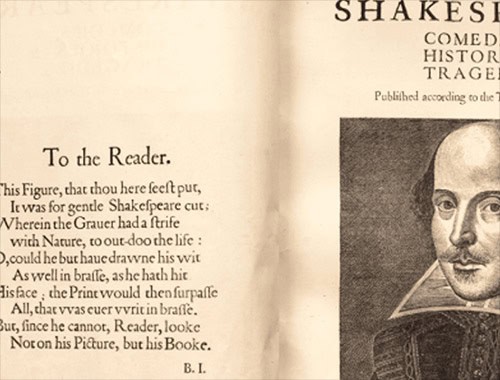
Visit our Discover Shakespeare section for a discussion of the authorship question, and more.
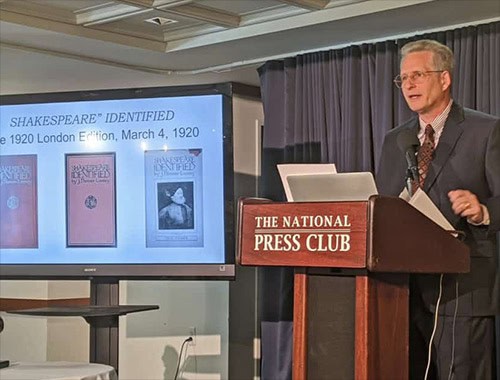
Watch videos of past conferences or attend the yearly conference and rub elbows with other Oxfordians from around the world.
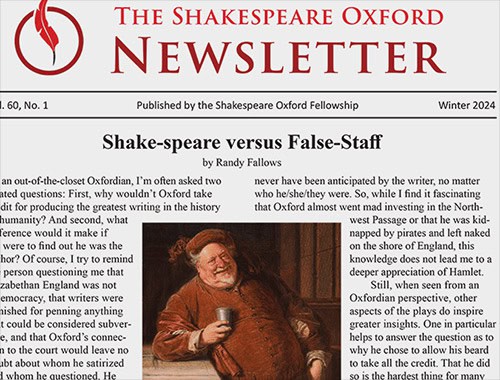
Visit our publications secton for SOF-authored works including our newsletter, annual journal and links to scholarly websites.
Thank you for signing up for your free 6-month membership to SOF! Consider renewing your membership with a full digital access Teacher Membership for only $29 per year, or become a Newsletter Member with full digital access plus printed versions of our Newsletter, The Blue Boar Tavern and The Oxfordian for only $89 per year. Visit our Membership page to learn more.
| Cookie | Duration | Description |
|---|---|---|
| cookielawinfo-checkbox-analytics | 11 months | This cookie is set by GDPR Cookie Consent plugin. The cookie is used to store the user consent for the cookies in the category "Analytics". |
| cookielawinfo-checkbox-functional | 11 months | The cookie is set by GDPR cookie consent to record the user consent for the cookies in the category "Functional". |
| cookielawinfo-checkbox-necessary | 11 months | This cookie is set by GDPR Cookie Consent plugin. The cookies is used to store the user consent for the cookies in the category "Necessary". |
| cookielawinfo-checkbox-others | 11 months | This cookie is set by GDPR Cookie Consent plugin. The cookie is used to store the user consent for the cookies in the category "Other. |
| cookielawinfo-checkbox-performance | 11 months | This cookie is set by GDPR Cookie Consent plugin. The cookie is used to store the user consent for the cookies in the category "Performance". |
| viewed_cookie_policy | 11 months | The cookie is set by the GDPR Cookie Consent plugin and is used to store whether or not user has consented to the use of cookies. It does not store any personal data. |