
This Month in Oxfordian History – July
The Merchant of Venice
By Sara Hill
One of 13 Shakespeare plays set in Italy, The Merchant of Venice was entered for publication at the London Stationers Register in the month of July 1598.
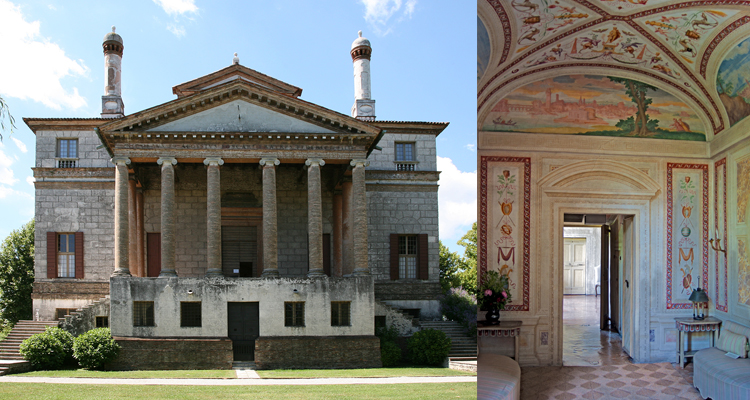
Richard Paul Roe’s The Shakespeare Guide to Italy (2011) supports the contention that the author of the plays, whoever he was, included details of Italian topography, transportation, local culture and custom that could only have been learned at first hand. For example, in The Merchant of Venice Shakespeare describes Portia’s villa of Belmont, located on the Brenta canal ten moglio (miles) from Venice. Roe shows that Belmont was a fictional stand-in for the actual Villa Foscari, pictured above. Designed around 1560 by Renaissance architect Andrea Palladio, Villa Foscari is still in existence today and is situated precisely where Shakespeare located Belmont.
This is one of many seemingly minor details Shakespeare included in the Italian plays that have no relevance to the plots. As Roe wrote: “In each place, he is describing something so obscure, off the wall, peculiar that a tourist would not even pay any attention to it. He’s giving you what I have come to believe is his personal, direct knowledge of his experiences in Italy.”
No evidence exists that William Shakspere of Stratford ever ventured far from the neighborhoods of Warwickshire and London, much less that he traveled to continental Europe.
However, Edward de Vere spent a well-documented 14 months in Europe in 1575-76, much of that time in Italy.
Excluding three set in ancient Rome, the remaining ten Shakespearean plays are set in various Italian locales—and Edward de Vere visited them all.
Membership dues cover only a fraction of our budget, including all our research, preservation and programming. Please support the SOF by making a gift today!
Blue Boar Tavern: Wassail Q&A
Tuesday Dec. 17, 8pm E / 5pm P
Sign up below for event invites!