Shakespeare Oxford Fellowship Research Grant Program
The purpose of the SOF Research Grant Program (RGP) is to support new research about Edward de Vere, 17th Earl of Oxford, relating to his

The purpose of the SOF Research Grant Program (RGP) is to support new research about Edward de Vere, 17th Earl of Oxford, relating to his

The 18th annual Shakespeare Authorship Research Centre (SARC) conference will be held at Concordia University, Portland, OR, April 10-13, 2014. The conference will convene Thursday
By Hank Whittemore Outline of a paper presented at the SOS/SF 2013 Joint Conference in Toronto First … a prologue The year is 1912
By Earl Showerman Abstract of a paper presented at the SOS/SF 2013 Joint Conference in Toronto “So far as native talent goes, there is
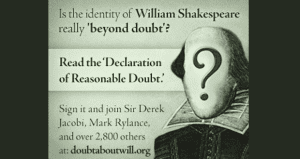
Press release from the Shakespeare Authorship Coalition: *********************************************************************************************** FOR RELEASE FRIDAY, 6TH DEC., 2013 Contact Persons: U.K.: Alexander Waugh, SAC Honorary President U.S.: John M. Shahan, SAC

Dear Members and Friends of the Shakespeare Fellowship, At the joint conference of the Shakespeare Fellowship (SF) and Shakespeare Oxford Society (SOS) in Toronto (Oct.
Sponsored by York and Guelph Universities, conference attracts renowned scholars and premieres two films TORONTO, October 15, 2013 – As millions of students read Shakespeare

2013 Toronto Conference Agenda Thursday, 17 October 12-1 Registration 1-1:15 Welcome. Opening of Conference. 1:15-2 Paper: Priscilla Costello. (Ontario). “Astrology, ‘Shakespeare’ and
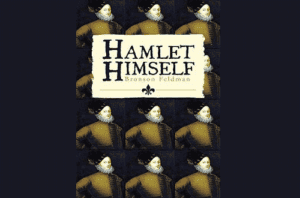
by Richard M. Waugaman Bronson Feldman, Hamlet Himself (2010). This review was published on the SOF website, Sept. 20, 2013. Graham Bradshaw famously said “Hamlet

Documentary Film Seeks to Uncover the Truth About “Shakespeare” September 16, 2013 — Last Will. & Testament explores one of the greatest literary mysteries of all
The proposed bylaws for the Shakespeare Oxford Fellowship have been released, and are available to read here. The proposed Plan of Unification of the Shakespeare

Read the 2012 winning essay: “Bringing Truth to Light – Why it Matters Who Wrote William’s Words” by Jacob Karlsson Lagerros Jacob Karlsson Lagerros, student
Schedule Thursday, 17 October 12-1 Registration 1-1:15 Welcome. Opening of Conference. 1:15-2 Shelly Maycock (Virginia) “Essex, Oxford and the Concept of Popularity in Late
Two new books take on the Shakespeare Authorship Question. The spring of 2013 saw the publication of two books about the Shakespeare Authorship Question with
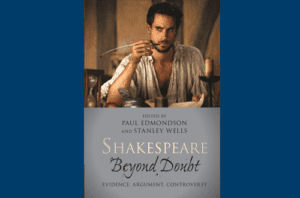
by Tom Regnier Editorial Note: See also Regnier’s more in-depth review of this book. Cambridge University Press recently released Shakespeare Beyond Doubt (Edmondson & Wells
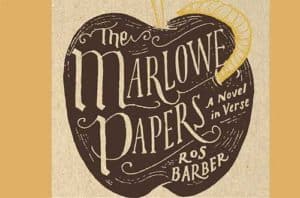
Ros Barber’s Shakespeare authorship novel The Marlowe Papers wins the Desmond Elliott Prize for debut fiction. Judge chair Joanne Harris: “Barber’s novel stood out