
Exploring the evidence that the works of Shakespeare were written by Edward de Vere, 17th Earl of Oxford
Exploring the evidence that the works of Shakespeare were written by Edward de Vere, 17th Earl of Oxford
This set of statements provides speaking and written prompts for anyone speaking with media representatives, or for those wanting a short and clear description of “The Case for Oxford.”
The core principles are concise, positive and authoritative, and are supported by a section of Frequently Asked Questions. They form the basis of the Oxfordian narrative and represent the common ground that is respectful of the many differing views held by our members.
1. Why does it matter who wrote the plays?
Modern theater audiences and literary readers have a far richer experience of the plays when they know that they satirized the Queen and prominent members of the court. The plays were not only autobiographical, they related to political and historical events in the 1570s and 80s.
For historians, an awareness of the true author transforms our understanding of the history and politics of the time. It provides a deeper appreciation of how the Italian renaissance impacted the English renaissance, and greater insight into the intrigues of the Elizabethan court. Uncovering the deliberate deception to conceal Oxford’s authorship of the Shakespeare works allows us to reconsider the history and politics of the time. Establishing Oxford’s place as the author of the greatest literary works in the English language is important. His life should be studied in more detail and his true legacy honored.
2. Why do we maintain that Oxford used the pen name William Shakespeare?Oxford’s position as the pre-eminent poet of Queen Elizabeth’s court was publicly acknowledged as early as 1586 and he was placed first on a list of seventeen living English playwrights who were the ‘best for comedy’. It was declared that his ‘Comedies and Enterludes deserved the highest prize’ and it was specifically mentioned that he did not publish his works under his own name.
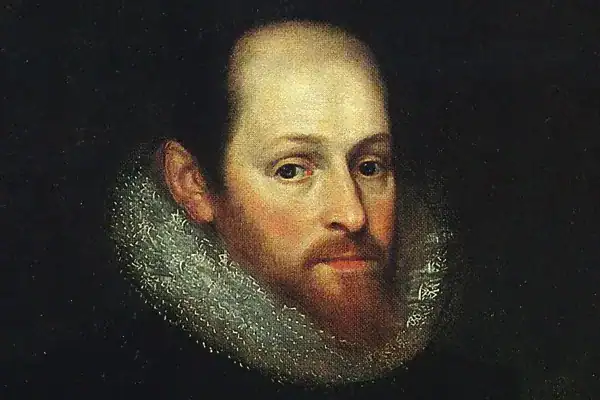
When Oxford first used the pen name Shakespeare in the publication of the long narrative poem Venus and Adonis in 1593, contemporary writers identified it as a pen name and suggested that they knew that he was the author. However, it is his own handwritten notes that provide definitive proof. Annotations in his handwriting in books that contained source material for the plays clearly show his creative processes in selecting phrases and formulating the characters and plots. So far more than five books have been found containing his handwritten notes, providing valuable insights into how and why he wrote the plays.
3. Why did Oxford use a pen name?
In the Elizabethan era there were severe punishments for any opinions that were considered to be critical of the Queen, politics or protestant religion. This was controlled by the 1581 Act Against Seditious Words and Rumors Against the Queen’s Most Excellent Majesty. Many writers published anonymously or under a pen name.
For Oxford, the foremost earl in the kingdom, the stakes were even higher. Aristocratic behavior, particularly in matters concerning honor, status, and lineage were strictly controlled. Engaging in trade, adopting behaviors considered vulgar, such as playwriting, or neglecting traditional aristocratic duties attracted the charge of class disloyalty and betrayal. Poetry was considered a pastime more befitting a noble, as long as it was not published for financial benefit.
In his early life he published some of his poems and dedications with the initials E.O. or the name Oxenford. He then adopted a series of pen names, including William Shake-Speare and Shakespeare for the publication of his long narrative poems and some of his plays, although most were published anonymously during his lifetime.
4. Why were the works attributed to Shakspere of Stratford-upon-Avon?
The works were attributed to William Shakspere (1564-1616) as the result of a deliberate deception to maintain Oxford’s anonymity. When the First Folio collection of the Shakespeare plays was published in 1623, Shakspere had been dead for 7 years. He had been living in rural Warwickshire and little was known about him other than his business activities. Creating the false attribution that he was the author went largely unnoticed by the general public at the time. It wasn’t until nearly a hundred years after his death that there emerged an interest in finding out about the author and the Stratford narrative was launched.
5. Isn’t his name on the plays?
Shakspere never used the name Shakespeare. During his lifetime, he was never identified as a poet or playwright, or as the author Shakespeare. The name on the poems and plays was consistently printed as Shake-Speare or Shakespeare and never as Shakspere or any other derivative with a short ‘a’.
Most of the population of Elizabethan England were illiterate. Their names would be written down based on how they were pronounced to the clerk, so there were different spellings for the same name. Shakspere’s name was always written as Shakspere, Shackspere, Shaksper, Shagsper or Shaxsper with a short ‘a’ sound.
6. Weren’t some of the plays written after Oxford’s death in 1604?
There is no documentary evidence for a specific date when any of the works were actually written, and none to support any of them being written after 1604. The dates for all the Shakespeare works are speculative and have evolved over the centuries. They have been proposed from the dates of publication, including the dates when the works were entered into the Stationers’ Register, the performance record, references to current events, and the availability of sources incorporated in the works. Each of these dating methods is seriously flawed.
The greatest error, however, has been for Shakespeare scholarship to only propose dates that fit the time period when Shakspere of Stratford-upon-Avon could have written the plays. Literary works are not necessarily written in the same year in which they are published. The topics and references in the plays suggest they were written much earlier.
Download a PDF of The Oxfordian Narrative: The Case for Oxford
| Cookie | Duration | Description |
|---|---|---|
| cookielawinfo-checkbox-analytics | 11 months | This cookie is set by GDPR Cookie Consent plugin. The cookie is used to store the user consent for the cookies in the category "Analytics". |
| cookielawinfo-checkbox-functional | 11 months | The cookie is set by GDPR cookie consent to record the user consent for the cookies in the category "Functional". |
| cookielawinfo-checkbox-necessary | 11 months | This cookie is set by GDPR Cookie Consent plugin. The cookies is used to store the user consent for the cookies in the category "Necessary". |
| cookielawinfo-checkbox-others | 11 months | This cookie is set by GDPR Cookie Consent plugin. The cookie is used to store the user consent for the cookies in the category "Other. |
| cookielawinfo-checkbox-performance | 11 months | This cookie is set by GDPR Cookie Consent plugin. The cookie is used to store the user consent for the cookies in the category "Performance". |
| viewed_cookie_policy | 11 months | The cookie is set by the GDPR Cookie Consent plugin and is used to store whether or not user has consented to the use of cookies. It does not store any personal data. |